
 Theo - t3․gg
Anthropic Actually Fixed Opus
Summary
AI summaries can be incomplete or wrong. Verify anything important against the original video.
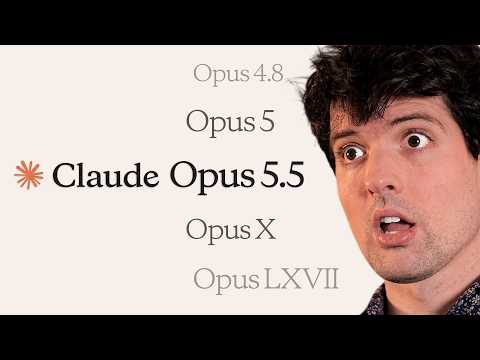
This video reviews the release of Claude Opus 5.5, analyzing its performance, cost-efficiency, and communication improvements compared to previous models like Opus 5.0 and Fable 5.1.
The video provides a detailed breakdown of Anthropic's release of Claude Opus 5.5. The presenter evaluates the model's performance improvements, noting significant enhancements in code migration, bug fixing, and reasoning. A core focus is the balance between performance and cost, with the video demonstrating that Opus 5.5 is cheaper to run than its predecessor, despite its enhanced capabilities. The review also highlights improvements in communication style, noting that the model is more natural, readable, and effective for long-term work sessions.
The presenter conducts a critical analysis of the model's performance using various industry benchmarks and personal testing examples. This includes a demonstration of code tasks, such as bug investigation and resolution, and an evaluation of the model's design capabilities. The video also includes a comparison of Opus 5.5 against competitors like GPT-6 Astra, and discusses the model's new data retention and compliance features. Overall, the presenter concludes that while not perfect, Opus 5.5 is a highly effective, high-value tool for professional software development tasks.
Verdict
Claude Opus 5.5 represents a significant, high-value improvement in performance and cost-efficiency, making it the superior default for professional coding tasks despite minor model-specific quirks.
Pros
Cons
Specs
Compared to
-
GPT-6 Astra
Opus 5.5 often offers better results at a more predictable cost structure despite being more token-hungry.
-
Claude Fable 5.1
Opus 5.5 is a clear performance and cost upgrade, particularly for heavy-duty coding tasks.
Best for
Not for
Key Points
- 0:11 Critique of previous model releases like Opus 5.0 and the naming conventions used.
- 6:33 Discussion on the performance improvements of Opus 5.5, particularly in code migration and bug fixing.
- 7:15 Analysis of cost and speed optimizations, highlighting a 40% reduction in run cost.
- 8:39 Review of the improved communication style and natural language output of the new model.
- 10:05 Detailed examination of performance benchmarks across various coding and reasoning tasks.
- 16:54 Discussion on data retention policies and how they impact model choice for businesses.
- 24:40 Evaluation of 'design skill' in front-end generation tasks compared to previous models.
- 25:35 Comparison of intelligence index versus cost per task, including a critique of benchmark visualization.
- 28:59 Demonstration of personal use cases, showing how Opus 5.5 performs on complex coding tasks.
- Introduction to the release of Claude Opus 5.5, noting its release date and context.
Worth watching if: You are a software developer or a power user of LLMs who needs to understand the practical trade-offs in performance, cost, and coding utility for the latest Anthropic models compared to competitors like OpenAI.
Get every Theo - t3․gg video extracted like this
One daily email with structured extracts of every channel you follow. Free tier covers 15 videos a month.
Sign in with GoogleNo credit card. Free tier forever.